What’s Next for Database Technology in 2026
Rebooter.S
13 min read


The database industry in the 2026 Database landscape is growing fast. The Enterprise Database Management System market could reach 83 billion dollars. Companies recognize that data management is crucial for success. Many are investing heavily to modernize their systems. Seventy-one percent are updating their main systems for AI integration. Twenty-three percent allocate a significant portion of their budget for this purpose. Data and AI trends are prompting companies to rethink their systems. They aim to resolve longstanding issues and concentrate on robust data strategies. Open governance, composable AI, and cloud maturity are transforming how leaders operate. These factors influence their plans, workflows, and competitive strategies.
The database industry is growing fast. Companies are spending a lot to update their systems. They want to use AI and make data management better.
Having a data-driven culture is very important for companies. It helps them make smart choices and react fast to market changes. They use tools like AI observability and data mesh.
Automation in database operations makes things work better. It helps companies handle data well and save money. Self-healing and self-tuning systems do a lot of the work.
Companies do not have enough skilled workers in database technology. It is important to spend money on training and learning. This helps close the skills gap.
Sustainability is now very important for data centers. They focus on saving energy and making smart investments. This helps balance good performance and caring for the environment.
The database industry in 2026 is growing very fast. More companies want to update their data systems. They want better ways to manage and use data. Experts think the market will get much bigger because of some main reasons:
New types of databases like NoSQL and NewSQL help companies work faster and grow bigger.
Adding AI and machine learning to databases makes it easier to study data and do tasks automatically.
Moving to the cloud means companies need special databases for mixed setups.
New rules make companies choose safer and more trusted databases.
Edge computing and IoT make it important to use data right away.
These changes make companies spend more money on new data tools. They want to use data and AI to keep up with others. More money goes into big data tools because companies want to use their data better. Spending on AI-ready systems is going up, and this will keep happening through 2026.
Leaders know that spending on data helps them beat other companies. They think updating their systems is needed to stay ahead. In 2026, companies want smarter and quicker systems. They put money into making things automatic, safe, and following the rules. Big data and AI are helping companies come up with new ideas.
In 2026, companies use data to make choices. They look at data all the time to learn what is happening. This is important because things change fast. AI observability helps companies fix problems before they happen. This keeps their data good for business use. Data mesh lets more people in a company use data and work together.
Companies see data products as very important. This helps them make money and use data in new ways. Using data to make choices changes how companies work. Leaders use data and AI to decide what to do next. They want strong data systems to help them grow and try new things.
Big data is a big part of these changes. Companies buy new tools to handle lots of data. Automation and AI tools like SQLFlash make databases work better and faster. These tools help companies react quickly to what customers want.
The database industry in 2026 shows how data and AI change business plans. Companies that spend money on data, new systems, and analytics do better. The market gives rewards to companies that use new ideas and big data to win.

Image Source: pexels
In 2026, companies have problems getting data ready for AI. Many have trouble with data quality, old technology, and high costs. Some teams do not want to change how they work. There are not enough people who know both tech and business. As AI data platforms grow, leaders worry more about rules and safety. The table below lists the main problems:
| Challenge Type | Description |
|---|---|
| Data Quality | Bad data is a big problem because AI needs good data to learn. |
| Organizational Resistance | Teams may not want AI because they fear losing jobs or control. |
| Lack of Expertise | Few workers can connect tech skills with business needs. |
| High Implementation Costs | Companies often do not know how much money AI will cost. |
| Legacy Technology Constraints | Old systems cannot handle the heavy data work that AI needs. |
| Governance Concerns | More AI means more risk, so leaders worry about rules and safety. |
To fix these problems, leaders use smart ways to manage data. They set rules for data, use machines to do tasks, and check their data often. Open standards stop companies from getting stuck with one vendor. One way to get to data helps cut down on too many tools. Setting rules at the semantic layer makes sure all tools follow the same policies. Connecting data, making it easy to understand, and letting business experts help makes better data products.
Composable AI lets companies change their data tools one part at a time. This way, teams can try new tech fast and grow. Using small models together makes the system flexible. Each business job is its own block, so teams can work together and change things easily. Composable AI gives many good things like faster results, lower costs, better rules, more accuracy, easy growth, and better business fit.
| Benefit | Description |
|---|---|
| Faster time to value | Ready-made parts help teams test and use new ideas fast. |
| Lower TCO | Sharing services means less work, fewer fixes, and steady costs. |
| Stronger governance | Checking each part makes rules and privacy easier to follow. |
| Greater accuracy | Special models do better than general ones for things like fraud or ads. |
| Scalability & resilience | Teams can make parts bigger or swap them without stopping work. |
| Business alignment | AI matches goals, so companies save time, fix problems, or sell more. |
Automation helps databases work fast and stay up. Closed-loop systems find and fix problems by themselves. Self-healing and self-tuning keep things running well. AI checks data in real time, tests changes, and tries new ideas safely. SQLFlash is a new tool that uses AI to make SQL faster and better. This tool helps companies stay online, see what is happening, and be ready for checks. Automation makes it easier to update systems and use machine learning. It also helps companies manage data in a simple and steady way.
In 2026, making old databases better is very important. Many companies have trouble updating their old systems. They want to make data management and technology stronger so they can grow. The best ways to change old databases include a few steps:
Leaders look closely at their current data systems.
Teams pick the best technology for the update.
Experts change systems to fit new data needs.
Companies move and connect data to new platforms.
They train workers and keep making things better.
Many businesses must pick between rehosting, replatforming, refactoring, rearchitecting, rebuilding, or replacing their databases. These choices help match updates with money plans and data and ai trends. Making old systems better helps companies manage data well and get ready for the future.
By 2026, almost all companies will use cloud-native data management. This trend makes companies spend more on digital tools and helps them update faster. Cloud-native tools help companies handle data well and grow their data systems. These platforms give strong data management, automation, and security. They also work with AI tools like SQLFlash, which make SQL faster and help databases run better.
Cloud-native data management lets companies change spending as needed. They can use more or less resources based on what they need. This way helps companies update and follow new trends. Cloud-native data management also keeps data safe and working well.
Hybrid and edge solutions are very important in 2026. Companies use hybrid IT to keep important data safe and follow rules. This plan helps them spend on both local and cloud data systems. Hybrid setups let companies control data nearby and use cloud tools. This makes things faster and helps with data laws.
Hybrid database setups keep the cloud control part away from the customer’s data part. This lets companies control their own data but still use cloud tools. It makes things faster, follows rules, and saves money.
Edge solutions help manage data in faraway places. They bring data work closer to where it starts. This helps companies act fast and keep up with new trends.
In 2026, open governance frameworks guide how companies manage data. These frameworks give clear rules about who owns data and how teams use it. They also show what technology helps with these jobs. Open governance builds trust and helps everyone see what is happening. The table below lists the main parts of these frameworks:
| Component | Description |
|---|---|
| People | Clear ownership and accountability roles |
| Process | Standardized workflows and lifecycle checkpoints |
| Technology | Automated discovery, lineage, and enforcement |
| Policy | Codified rules for privacy, security, quality, and retention |
Open governance helps companies keep up with data and ai trends. It also makes updating systems easier and more dependable. Teams use these frameworks to keep data safe and follow the rules.
Security is still a big worry for every company. Organizations use new ways to keep data and databases safe. They use AI to find threats right away and guess what might happen. Zero-trust setups make teams check who is using the system and if devices are safe. Companies use automation to stop mistakes and fix problems faster. They also plan money for security updates to fight new dangers. Strong rules help them follow strict laws about privacy and safety.
AI tools like SQLFlash help make SQL better and find risks in data.
Automation in security helps companies keep up with new changes.
Security teams must always pay attention. They use smart tools and strong rules to keep data safe and systems working.
Regulatory compliance changes fast in 2026. Companies must follow new laws about data and security. The table below lists some important rules:
| Regulation | Description | Impact |
|---|---|---|
| NIS 2 Directive | Expands cybersecurity requirements across the EU, affecting critical infrastructure sectors. | Mandatory vulnerability reporting for manufacturers by September 2026. |
| EU AI Act | Introduces obligations for high-risk AI systems processing personal data. | Major deadlines pushed from 2026 to 2027 due to organizational preparedness. |
| GDPR Amendments | Evolving data privacy requirements. | Ongoing adjustments to compliance expectations. |
| SEC Cybersecurity Disclosure Rules | Requires public companies to report material cybersecurity incidents. | Adds layers of compliance for public organizations. |
These rules make companies improve how they handle data and security. Companies must update their systems to keep up with changes and stay ahead of new trends.
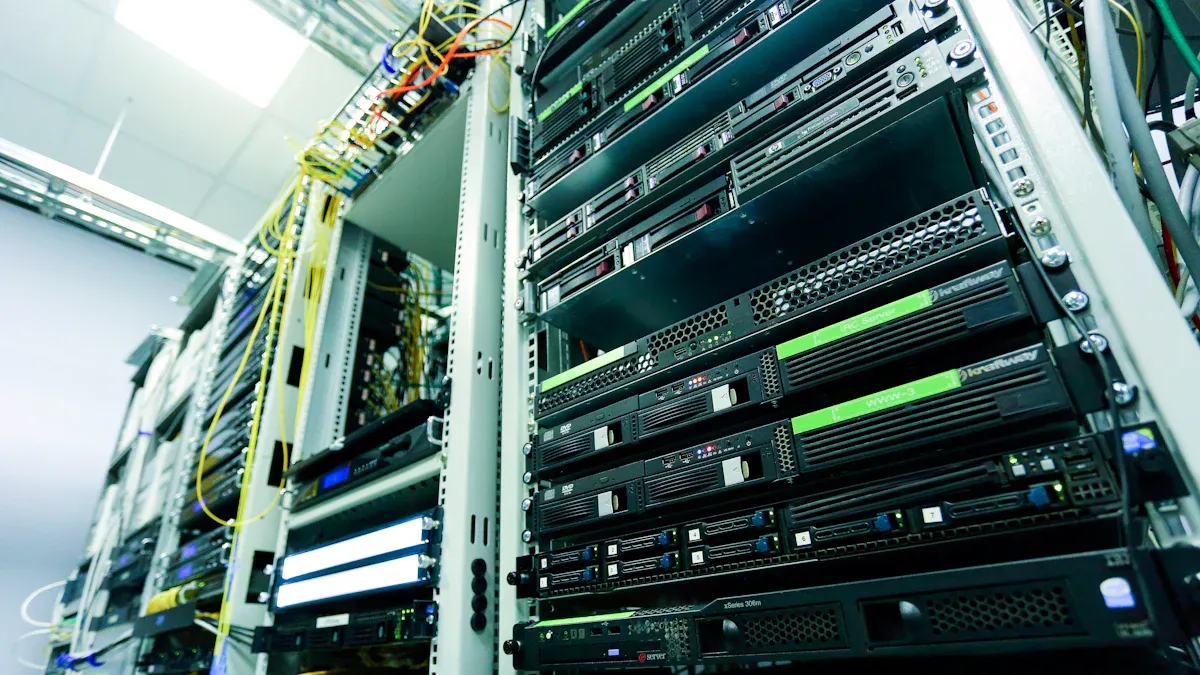
Image Source: pexels
The data center industry is spending more money on infrastructure. By 2030, spending will be over $1 trillion each year. In 2024, the industry spent $290 billion. Big companies like Alphabet, Microsoft, Amazon, and Meta are leading this growth. They build new centers and use better cooling and power systems. These changes help companies meet the need for AI and digital services. As things get updated, companies want strong data management systems. They need to support new databases and handle more data every year.
Scalability and performance are very important for data centers. Operators use flexible computing to handle busy times. This helps them avoid spending too much on upgrades. Studies show that lowering just 1% of AI data center load helps a lot. It lets grid operators add 126 GW of new load without big changes. Sixty-eight percent of leaders think flexible demand is key for speed. Utilities spend money on new tech to make centers better and build new substations faster. National Grid UK is spending $100 million on AI startups. These investments help data centers connect to the grid quickly and work better. AI tools like SQLFlash help make SQL queries faster. They also make data management and databases more reliable.
Sustainability is shaping the future of data centers. Operators use new ways to support green data management and updates. The table below shows some important efforts:
| Initiative | Description |
|---|---|
| Energy efficiency metrics | Using Power Usage Effectiveness (PUE) to measure and improve energy use. |
| Carbon-free energy sourcing | Moving to 100% renewable or hourly carbon-free energy through special agreements. |
| Water conservation standards | Setting targets to use less water and recycling what they use. |
| Circular economy practices | Reusing, repairing, and recycling equipment to cut down on e-waste. |
| Heat recovery implementation | Capturing waste heat and using it for district heating or other applications. |
These actions help companies lower their impact on the environment. They also help with better data management and updates. As the industry grows, leaders try to balance performance, cost, and being green.
In 2026, there are not enough skilled workers in database technology. Most companies have trouble finding people with the right skills for data management. Here are some facts about the problem:
84% of companies say they do not have enough skilled workers in database technology.
More than 90% of organizations around the world will have problems because of the IT skills shortage by 2026.
This shortage could cost companies $5.5 trillion.
This problem slows down updates and makes it hard to use new tools. Many companies need experts who know about data and management. They also need people who can use AI to make SQL optimization better. Tools like SQLFlash help by making SQL queries faster and easier to handle. Companies that train their teams can fix the skills gap and improve data management.
Companies need new ways to manage data governance. Many use automation and teamwork to solve these problems. For example, Tide is a digital bank in the UK. They made GDPR compliance better by adding privacy to automated processes. They worked with data and legal teams to decide what counts as personal information. Automation helped them finish a 50-day manual job in just a few hours. This shows that new ideas in data management can save time and lower risk. Companies that use automation and clear rules can keep up with new laws and protect their data.
Sustainability is important for the future of the industry. Companies spend money on green IT to help the environment. They pick energy-saving data management systems and support responsible investment. Many companies use renewable energy and recycle old equipment. These actions help them follow new rules and show they are leaders. As data grows, companies must balance performance, cost, and caring for the environment. Responsible investment in data management helps companies grow and update for the future.
In 2026, database technology helps companies do well. Businesses spend money on cloud and edge computing. They also use secure AI to make things work better and build trust. Using AI for SQL optimization, like SQLFlash, makes analytics faster. Here are some important steps:
| Category | Action Required |
|---|---|
| Infrastructure | Upgrade data systems and computing |
| Workforce | Retrain for AI and digital skills |
| Processes | Redesign workflows for AI integration |
| Strategy | Build AGI adoption roadmaps |
Leaders who care about data management do better. They use open governance and cloud maturity to stay ahead.
SQLFlash is your AI-powered SQL Optimization Partner.
Based on AI models, we accurately identify SQL performance bottlenecks and optimize query performance, freeing you from the cumbersome SQL tuning process so you can fully focus on developing and implementing business logic.
Join us and experience the power of SQLFlash today!.