Top 7 MySQL Alternatives (2026): When to Stay or Switch
Rebooter.S
10 min read
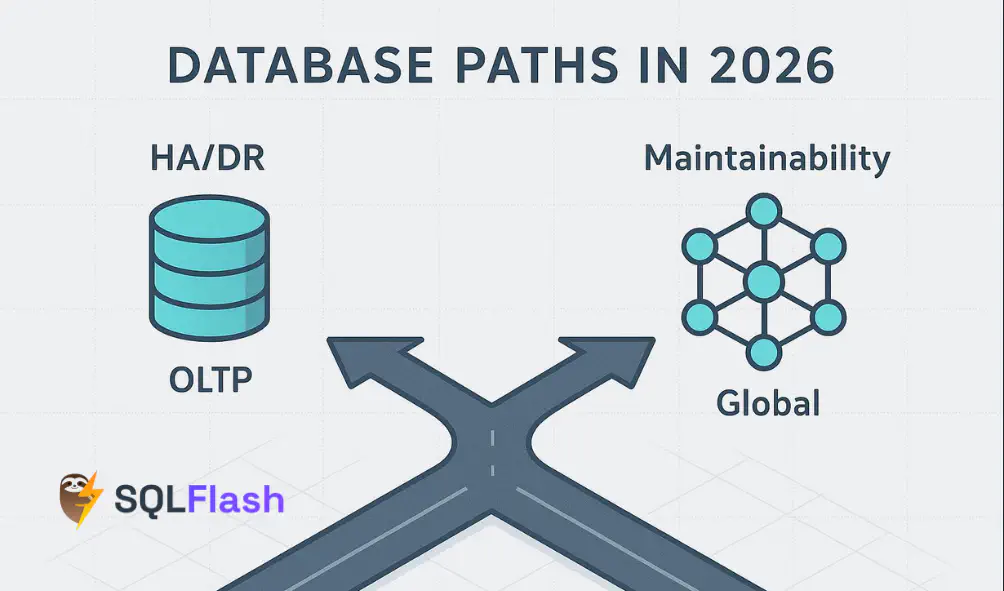
If you run a transactional, read‑heavy app and your team already speaks MySQL fluently, switching databases is a big bet. The real question isn’t “What’s the hottest engine?” It’s “Will we improve maintainability without blowing up risk and day‑2 operations?” This guide keeps that lens: pragmatic picks for OLTP, clear trade‑offs, and migration notes you can act on.
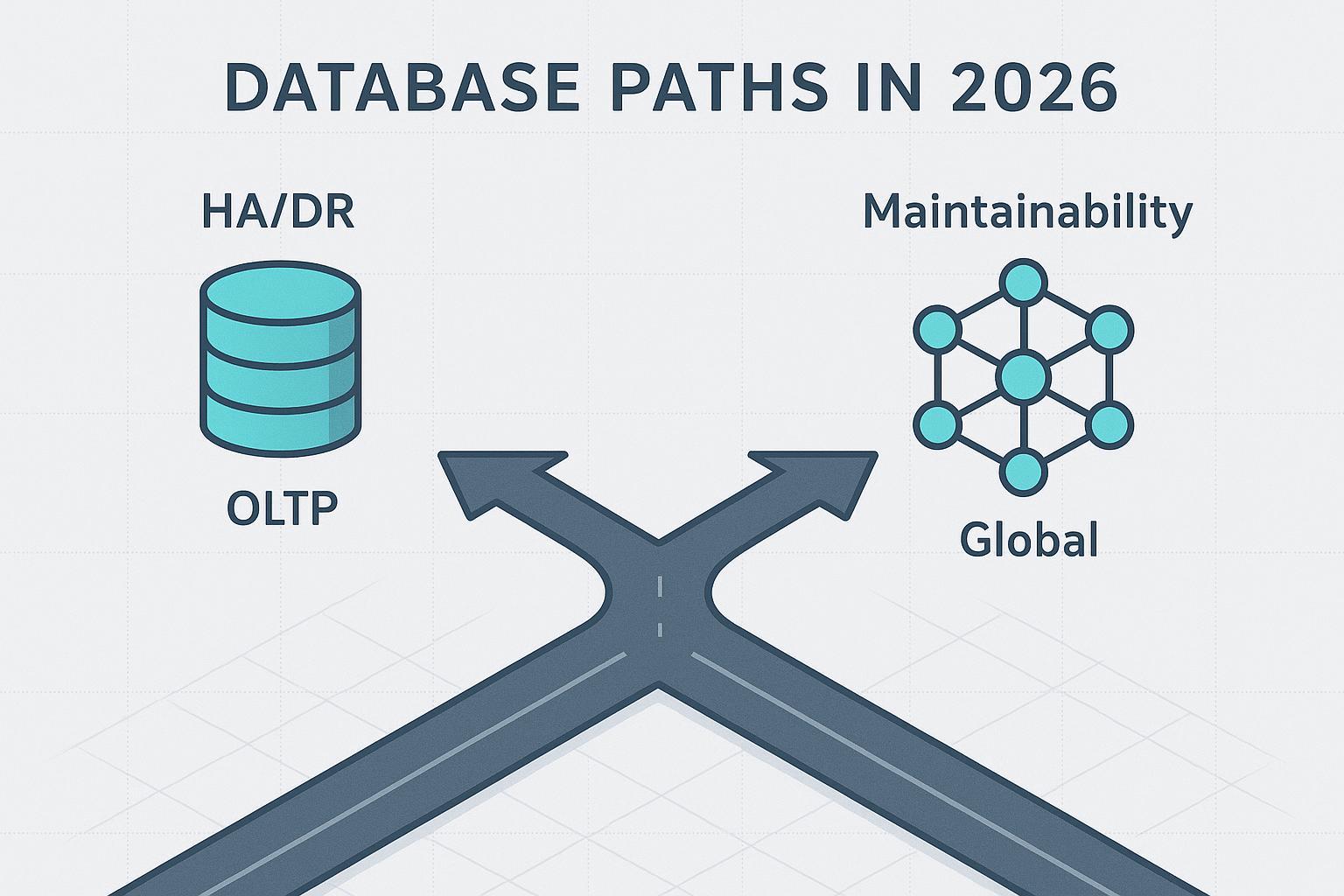
Think of your database choice like a transmission in a truck: the one you know can carry most loads, but certain routes demand different gears. Use this matrix to decide quickly.
| Situation | Stay with MySQL | Switch away |
|---|---|---|
| Read‑heavy workload with modest write contention and replicas meet latency goals | Strongly consider staying, especially with managed MySQL or proven sharding paths | Switch only if you need richer SQL, global writes, or lower operational toil than you can achieve with current tooling |
| Team has deep MySQL experience and migration would touch many stored routines and ORM assumptions | Staying wins on maintainability and risk | Switch if you accept some code change in exchange for feature depth or managed reliability |
| You must scale writes or go multi‑region with consistent transactions | Staying plus middleware like sharding can work but increases complexity | Distributed SQL platforms offer simpler global semantics with explicit trade‑offs |
Brief vignettes:
Seven OLTP‑ready options that map cleanly to common scenarios. Tags help you zero in quickly.
| Candidate | Quick tag | Why it fits |
|---|---|---|
| PostgreSQL | Best for rich SQL and extensibility | Mature MVCC, JSONB, indexing breadth; strong for complex queries |
| MariaDB | Best drop‑in familiarity | Close to MySQL behavior; verify version differences |
| Amazon Aurora MySQL and PostgreSQL compatible | Best managed reliability on AWS | Decoupled storage, fast failover, many replicas; pay for simplicity |
| TiDB | Best MySQL‑compatible scale‑out and HTAP | Horizontal scale plus analytics via TiFlash |
| CockroachDB | Best for global consistency | Serializable transactions and multi‑region tooling |
| YugabyteDB | Best for PG skills with distributed scale | PostgreSQL compatibility with tunable consistency |
| Vitess | Best to keep MySQL while sharding | Proven internet‑scale sharding conventions |
Overview and fit: PostgreSQL brings robust MVCC, default Read Committed isolation, and an optional Serializable Snapshot Isolation path, with feature depth in JSONB, indexing (GIN, GiST, BRIN, partial), and extensions. Official manuals cover concurrency and PITR in detail; see the PostgreSQL 17 documentation index for transaction isolation and backup chapters in 2026. According to the PostgreSQL documentation index for version 17, you can navigate Concurrency Control and Continuous Archiving for PITR in the core manuals as of 2026, which anchors operational practices in primary sources PostgreSQL 17 documentation index.
Operations notes: WAL archiving supports point‑in‑time recovery; mature replication options help read scaling. Monitoring deadlocks, bloat, and autovacuum keeps latency predictable.
Migration and compatibility: Expect SQL dialect differences, function behavior changes, and stored routine rewrites. pgloader is commonly used for schema and data moves; the PostgreSQL community wiki outlines conversion practices and tooling as of 2026 in a dedicated guide PostgreSQL wiki on converting from other databases.
When not to choose: If your team cannot absorb dialect shifts soon or your workload depends heavily on MySQL‑specific semantics and tooling, staying may be safer.
Overview and fit: MariaDB preserves much of the MySQL developer experience and operational feel, making it a pragmatic drop‑in for many teams. However, GTID replication differs from MySQL and is not wire‑compatible; this is documented in the official MariaDB replication guides as of 2026 MariaDB GTID replication and compatibility notes.
Operations notes: Mariabackup provides full backups and restore paths; binlogs enable point‑in‑time recovery. Verify HA topology and version match before cutover.
Migration and compatibility: Many apps move with minimal code changes, but you should validate behavior differences feature‑by‑feature. MariaDB publishes a compatibility overview contrasting with MySQL as of current releases MariaDB vs MySQL compatibility overview.
When not to choose: If you rely on MySQL‑specific GTID behavior, X Protocol, or features that have diverged, you may face friction.
Overview and fit: Aurora separates compute from a distributed storage layer replicated across multiple availability zones. That architecture underpins fast failover and supports up to fifteen read replicas in a cluster as documented in AWS guides in 2026 Aurora overview and replicas.
Operations notes: Managed backups to S3, automated failover, and fleet operations reduce day‑2 toil. Global Database offers cross‑region replication with well‑documented limits that you should verify against current AWS documentation before design.
Migration and compatibility: MySQL‑compatible and PostgreSQL‑compatible variants align with familiar clients and drivers. Use AWS DMS for minimal‑downtime migrations; AWS publishes prescriptive guidance for full‑load plus change data capture as of 2026 AWS Database Migration Service overview.
When not to choose: If you must avoid cloud lock‑in or your cost model penalizes storage I/O, instance hours, or cross‑region data flow, evaluate carefully.
Overview and fit: TiDB is a distributed SQL database with MySQL wire compatibility, combining TiKV for transactions with TiFlash for analytics. Official docs describe the architecture and compatibility in 2026, helping teams reuse MySQL tooling while gaining scale‑out capabilities TiDB overview and compatibility.
Operations notes: Components like PD, TiKV, and TiFlash introduce operational complexity; plan for cluster‑aware monitoring and tuning. Snapshot isolation semantics and a global timestamp service shape latency under contention.
Migration and compatibility: Wire compatibility eases client transitions, but performance characteristics differ from single‑node MySQL. Validate ORM behavior and transaction retries.
When not to choose: If your team needs a single‑node operational model or cannot staff distributed cluster operations, consider managed options or sharding middleware.
Overview and fit: CockroachDB emphasizes survivability and global consistency with default Serializable isolation. Newer releases support Read Committed modes, but the platform’s strong transaction model expects client‑side retry handling under contention; these behaviors are documented in official basics as of 2026 CockroachDB developer basics and isolation.
Operations notes: Scheduled backups, RESTORE, and point‑in‑time recovery via revision history are first‑class features. Multi‑region tooling and geo‑partitioning help keep data close to users.
Migration and compatibility: PostgreSQL wire compatibility helps many drivers, but it is not a full PostgreSQL clone. Test queries, indexes, and sequences for semantics.
When not to choose: If your workload cannot tolerate retried transactions or you need exact PostgreSQL feature parity, you may face refactoring work.
Overview and fit: YugabyteDB provides PostgreSQL‑compatible YSQL with distributed ACID transactions over Raft. Official documentation details isolation levels and transaction behavior, guiding design choices in 2026 ACID transactions in YSQL.
Operations notes: Distributed snapshots and backup tooling support recovery; multi‑region topologies are well described for various latency and consistency profiles.
Migration and compatibility: PostgreSQL familiarity is valuable. Verify extension support and exact feature coverage for your app’s needs.
When not to choose: If you require niche PostgreSQL extensions that aren’t supported or prefer a simpler single‑node operational model, reconsider.
Overview and fit: Vitess is a sharding layer for MySQL that preserves MySQL semantics while adding routing, vindexes, and shard management. The official overview explains its topology service, VTGate, and VSchema conventions in 2026 Vitess what is Vitess.
Operations notes: You gain scale by splitting tables into keyspaces and shards, but cross‑shard joins and transactions require careful design. Expect additional operational components and conventions to manage.
Migration and compatibility: Because applications keep using MySQL drivers, many migrations are incremental. The trade‑off is sharding complexity and query routing rules you must learn and enforce.
When not to choose: If your application is not shard‑friendly or relies on heavy cross‑table transactions, Vitess can complicate development.
Safe moves hinge on staged rollouts, rigorous testing, and a clean rollback. Here is a compact checklist.
Benchmarks are only useful if they model your workload. Focus on latency under contention, not just average throughput. A minimal Sysbench recipe for a read‑heavy OLTP POC:
| |
Read your metrics like a pilot: p95 and p99 latency, mutex waits, checkpoint or flush behavior, replica lag, and retry counts under strict isolation. If you plan multi‑AZ or multi‑region, repeat tests across placement to surface network and consensus costs.
Weights reflect what most startup CTOs and senior DBAs prioritize in 2026.
| Candidate | Maintainability 30% | Ops reliability 20% | Perf and concurrency 20% | TCO 15% | Ecosystem 10% | Compliance 5% |
|---|---|---|---|---|---|---|
| PostgreSQL | High | High | High | Medium | High | Medium |
| MariaDB | High | Medium | Medium | High | Medium | Medium |
| Aurora MySQL and PG | High | High | High | Medium‑Low | Medium | High |
| TiDB | Medium | Medium | High | Medium | Medium | Medium |
| CockroachDB | Medium | High | High | Medium | Medium | High |
| YugabyteDB | Medium | High | High | Medium | Medium | High |
| Vitess | Medium | Medium | High | High | Low | Medium |
Rationale in one line each:
Start from your constraints, not headlines.
A closing thought: MySQL alternatives are not a silver bullet. The best choice is the one your team can operate confidently on day 2, 200, and beyond. Run a targeted POC, measure tail latency under contention, and write your rollback plan before you begin replatforming.
References cited in this guide as of January 2026:
SQLFlash is your AI-powered SQL Optimization Partner.
Based on AI models, we accurately identify SQL performance bottlenecks and optimize query performance, freeing you from the cumbersome SQL tuning process so you can fully focus on developing and implementing business logic.
Join us and experience the power of SQLFlash today!.